
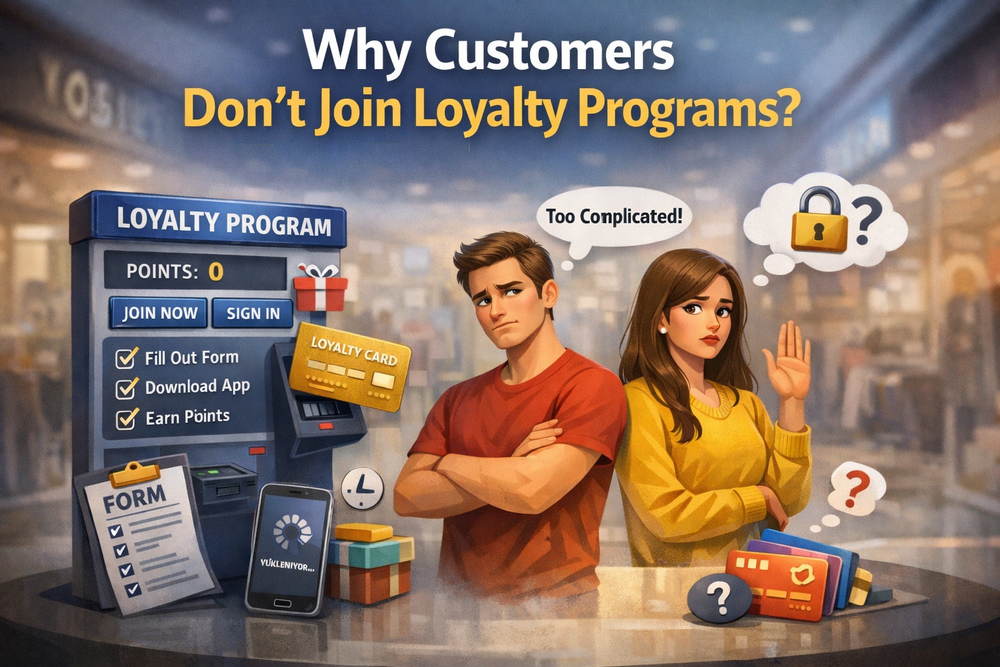
Many businesses launch loyalty programs.
But most of them never reach the level of adoption they expect.
The system is there. The campaign is ready. The rewards exist.
But the customer is missing.
And that’s where the real problem begins:
👉 customers don’t join
So why?
Do customers simply not care about loyalty programs?
Or are we building systems they were never going to join in the first place?
The Participation Problem Runs Deeper Than You Think
When loyalty programs fail, most businesses look in the wrong place.
They usually assume:
- the reward isn’t attractive enough
- the campaign isn’t strong enough
- customers aren’t interested
But the real issue is different.
👉 it’s not about interest — it’s about behavior
Customers may be interested.
But they don’t take action.
And that gap is everything.
1. Starting Feels Like Work
For a customer, joining a loyalty program often means going through multiple steps:
- creating an account
- entering personal information
- downloading an app
- setting things up
Each step seems small.
But together, they create friction.
And in that moment, the customer asks:
“Is this really worth it?”
If the answer isn’t immediate and obvious, they don’t start.
2. There’s No Immediate Value
Most loyalty programs are built around delayed rewards.
You collect points.
You wait.
You eventually get something.
But customers don’t think in long-term systems.
👉 they think in the present moment
If they don’t feel value right away, motivation disappears.
And without motivation, there is no participation.
3. Too Many Choices Lead to No Action
Today’s customer is overwhelmed with options.
- multiple brands
- multiple apps
- multiple offers
This doesn’t increase participation.
It creates decision fatigue.
And eventually, the customer chooses the easiest option of all:
👉 doing nothing
4. Trust Is a Hidden Barrier
Before joining, many customers ask themselves:
- What happens to my data?
- Will I get spammed?
- Is this even worth it?
If these questions aren’t clearly answered, the customer hesitates.
And hesitation kills action.
Loyalty is built on trust.
But most programs expect commitment before trust exists.
5. Mental Load: “I Have to Keep Track of This”
Once a customer joins a loyalty program, a new responsibility appears:
- tracking points
- remembering the system
- following rewards
This creates cognitive load.
But modern users avoid anything that feels like effort.
👉 they don’t want to manage another system
If participation requires thinking, it won’t scale.
6. Loyalty Programs Feel Like Extra Work
From the customer’s perspective, many loyalty programs feel like this:
“This is something I have to actively manage.”
And the moment it feels like extra work, the system loses.
Because customers naturally move toward:
- what is easier
- what is faster
- what requires less effort
If your program doesn’t align with that, it gets ignored.
7. There’s No Strong Reason to Join
Many programs communicate:
👉 “Join and get benefits”
But that’s not enough.
There’s no strong, immediate reason to act.
If the customer doesn’t experience:
- instant reward
- instant benefit
- instant relevance
they delay the decision.
And most delayed decisions never happen.
The Real Problem: Onboarding Design
All of these issues point to a single root cause:
👉 poor onboarding design
Most loyalty systems are built around:
- data collection
- internal processes
- business logic
But from the customer’s perspective, it feels like friction.
And friction reduces participation.
So How Do You Increase Participation?
Successful systems share one key trait:
👉 starting is effortless
They:
- minimize steps
- deliver immediate value
- remove the need for thinking
And most importantly:
👉 they don’t require effort from the user
Because the moment effort is required:
👉 participation drops
Final Thought
Customers don’t join loyalty programs.
But not because they don’t care.
👉 because the system makes it hard to start
If joining feels slow, complex, or unclear:
👉 it won’t happen
Maybe it’s time to stop asking:
“How do we get more customers to join?”
And start asking:
👉 “How do we make starting effortless?”
What Do You Think? Why do you think customers avoid loyalty programs? What’s the real barrier?